Company News
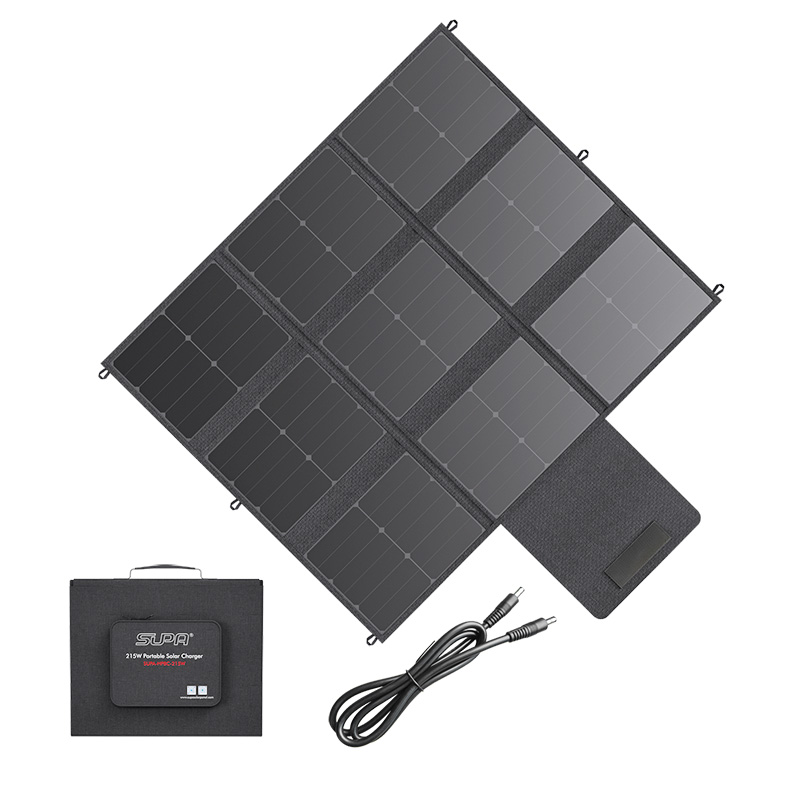
Outdoor activities often require a reliable power source for charging electronic devices away from conventional outlets. Whether users are camping, traveling by road, or exploring remote locations, portable solar equipment offers a convenient way to access renewable energy. A foldable solar panel 200w combines 200W rated power with LONGi high-efficiency monocrystalline HPBC solar cells that deliver a stated generation efficiency above 25%. Moreover, its four-fold design makes transportation and storage easier, helping outdoor users bring solar charging equipment wherever sunlight is available.
How High-Efficiency HPBC Cells Make Better Use of Sunlight
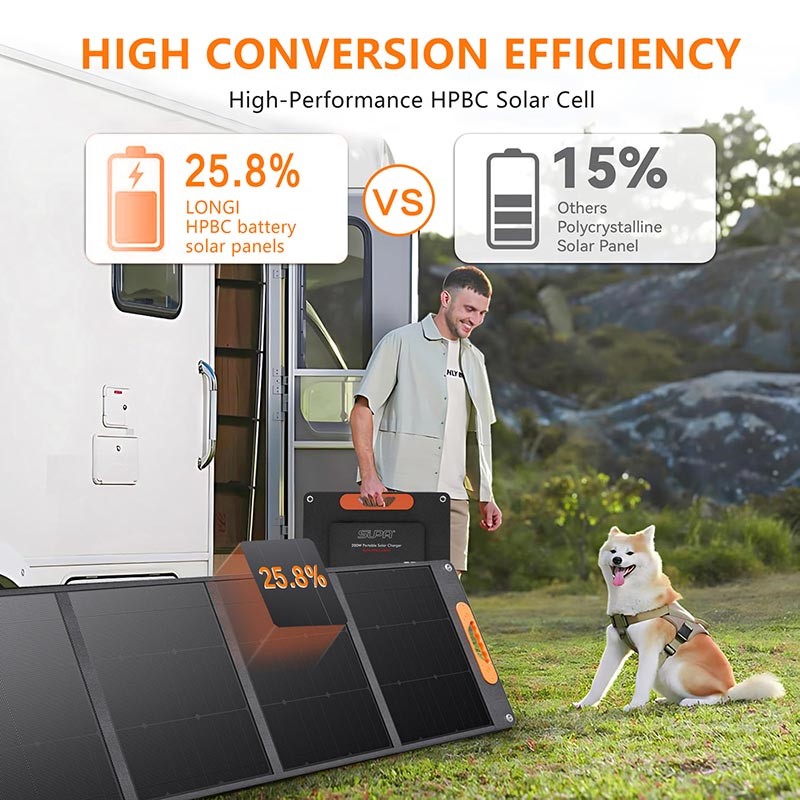
Solar cell efficiency affects how effectively a panel converts incoming sunlight into electricity. This product uses LONGi monocrystalline HPBC cells with a stated generation efficiency of over 25%, helping it convert available sunlight into usable power under suitable conditions. Consequently, users can benefit from efficient solar energy collection during outdoor activities. However, actual output varies with sunlight intensity, shading, temperature, panel angle, and connected equipment, so users should consider these conditions when planning their charging needs.
Why a Four-Fold Design Improves Portability
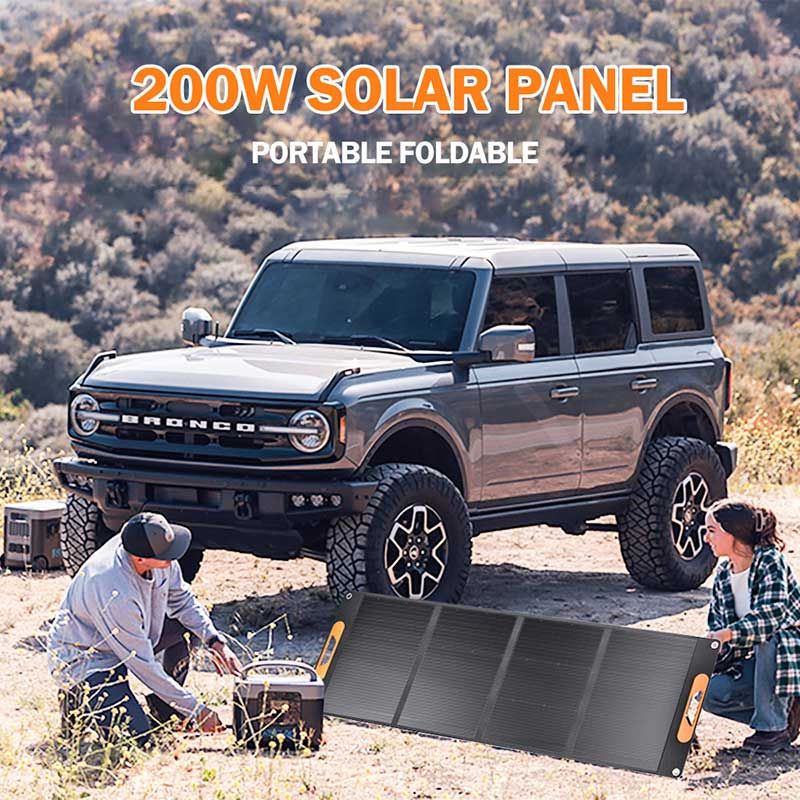
A portable solar panel should provide useful power without creating unnecessary difficulties during transportation. The panel's four-fold construction allows users to reduce its size for storage, making it easier to carry in a vehicle or pack with other outdoor equipment. In addition, the integrated handle supports convenient handling, while the sewn fabric packaging helps protect the folded panel from scratches during transport. Therefore, this design offers a practical balance between power capacity and portability for camping trips, road travel, and other outdoor activities.
200W Solar Power for Outdoor Charging
With a rated output of 200W, the panel provides a solar charging option for compatible portable power stations and electronic equipment. For example, users may connect a suitable power station to supply energy to phones, lights, cameras, and other devices within the system's capacity. Furthermore, access to sunlight can help users replenish stored energy when they spend time away from grid power. Nevertheless, charging speed depends on sunlight conditions, the connected equipment's input limits, and the energy requirements of each device, so buyers should confirm compatibility before use.
Key Features for Camping and Travel
The product combines high-efficiency solar cells with a portable structure designed for convenient outdoor use. Its four-fold construction helps reduce storage space, while the carrying handle makes it easier to move the panel between charging locations. Meanwhile, the protective fabric package supports storage and helps reduce surface scratches during transportation. Together, these features make the panel a practical option for users who want to bring solar charging equipment on camping trips and outdoor adventures.
How to Set Up a Foldable Solar Panel
Correct setup helps users make better use of available sunlight. First, remove the panel from its protective package and unfold each section carefully on a stable surface. Next, position the panel toward the sun and avoid shadows from trees, tents, or nearby objects. Finally, connect it to compatible equipment using the appropriate cable and follow the manufacturer's charging instructions.
For better charging conditions, users should reposition the panel as the sun moves and keep its surface clean. In addition, they should avoid placing the panel where strong winds could knock it over or where people might step on it. After use, disconnect the equipment, fold the panel carefully, and store it in the protective fabric package. These simple practices help protect the panel during regular outdoor use.
Choosing Solar Panels for Camping
Solar panels for camping can provide an additional energy source for compatible power stations and electronic equipment. For instance, campers may use solar energy to replenish a power station that supports lighting, communication devices, and other essentials. Similarly, a camping solar panel can offer more flexibility when users stay away from conventional electrical outlets for extended periods. However, available energy depends on weather, daylight hours, shading, and system efficiency, so users should estimate their power consumption before choosing a solar setup.
Compared with rigid panels, portable foldable solar panels emphasize convenient transportation and setup. As a result, they can suit camping, road trips, outdoor work, and temporary off-grid activities where mobility matters. At the same time, users should follow the product's operating guidance and avoid excessive moisture, impacts, and severe weather. By considering both performance and handling requirements, buyers can select a solar charging option that better fits their intended use.
Portable Solar Solutions from SUPA
SUPA provides portable solar charging options for customers seeking convenient energy access during outdoor activities. When evaluating a solar panel foldable design, buyers should consider rated power, cell technology, packed size, carrying features, and compatibility with their existing equipment. Moreover, confirming connector specifications and charging requirements before purchasing can help reduce setup problems. For distributors and B2B purchasers, these details also support clearer product selection for different outdoor power needs.
Conclusion
Efficient solar cells and a compact folding structure can make outdoor energy collection more convenient. With 200W rated power, LONGi monocrystalline HPBC cells, and a stated generation efficiency above 25%, a foldable solar panel 200w offers a portable option for compatible off-grid charging setups. In addition, its four-fold construction, carrying handle, and protective fabric packaging support convenient transportation and storage. By positioning the panel carefully and checking system compatibility, users can make better use of available sunlight during camping, travel, and other outdoor activities.