Company News
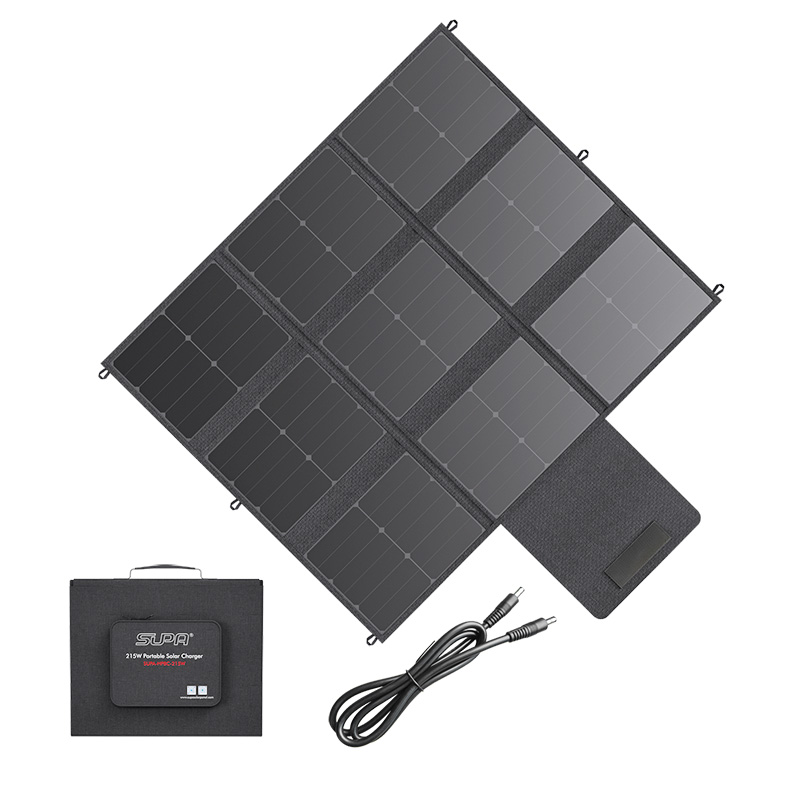
Outdoor activities often take people far away from conventional power outlets, making portable energy solutions valuable for camping, hiking, and road trips. Solar charging offers a practical way to collect renewable energy during the day and supply electricity to compatible electronic devices. However, the performance of a portable solar charger depends on more than its rated power. Cell technology, panel positioning, portability, and operating conditions all influence the charging experience. A 200W HPBC folding solar panel combines high-efficiency monocrystalline HPBC solar cells with a portable four-fold structure, providing a convenient option for outdoor power needs.
How Does HPBC Solar Cell Technology Improve Energy Conversion?
HPBC refers to a high-performance back-contact solar cell structure that places electrical contacts on the rear side of the cell. This design reduces the need for front-side metal contacts, allowing more sunlight to reach the active surface. Consequently, the cell structure can improve light absorption and support higher energy conversion efficiency.
The product uses LONGi high-efficiency monocrystalline HPBC solar cells, with a stated generation efficiency above 25%. This makes the HPBC solar panel suitable for portable applications where available panel area is limited and efficient solar energy collection is important. Nevertheless, actual power generation depends on sunlight intensity, panel angle, shading, temperature, and other environmental conditions.
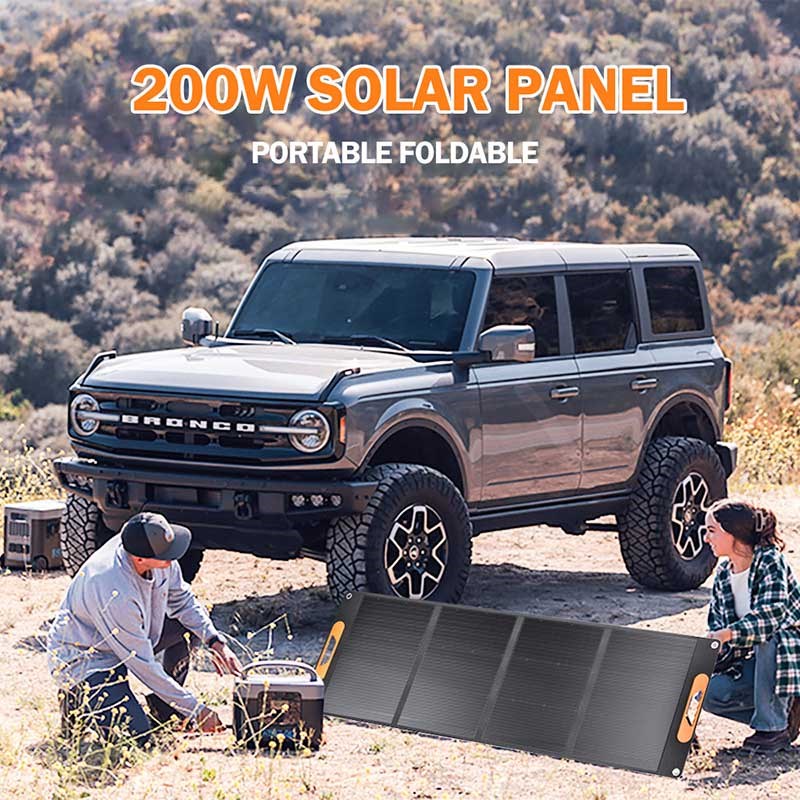
Why Choose a 200W Folding Solar Panel for Camping?
Camping equipment needs to balance power output with portability. A large fixed solar installation may provide substantial energy, but it is not always convenient to transport or set up at a temporary campsite. In contrast, a folding solar panel can be opened when sunlight is available and packed away when charging is finished.
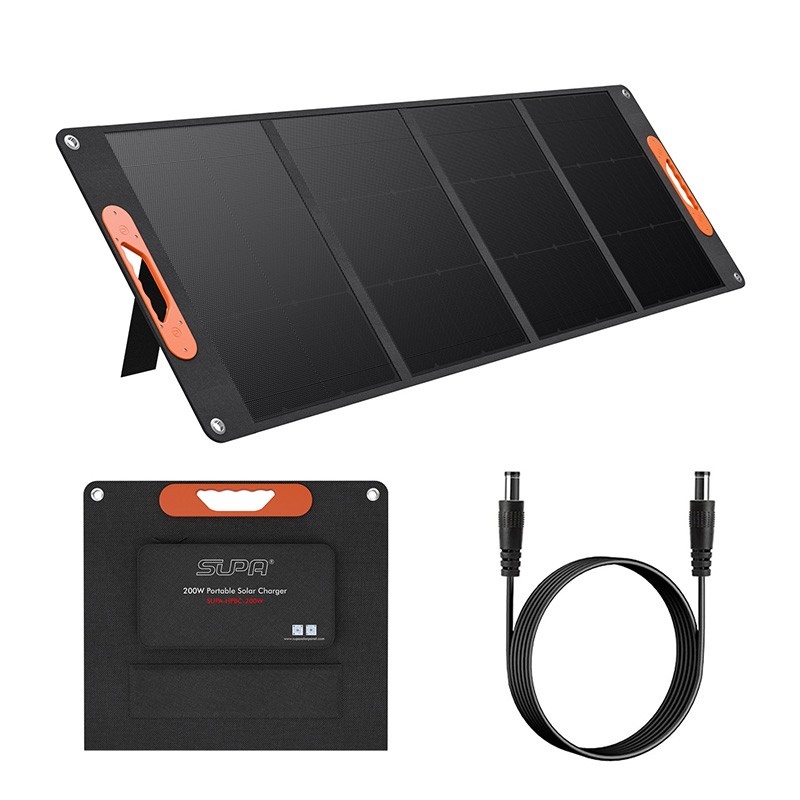
A 200W HPBC folding solar panel is designed to provide outdoor charging capability while remaining convenient to carry. Its four-fold structure reduces the space required for storage, and the integrated portable handle makes transportation easier. In addition, the sewing-cloth packaging helps protect the folded panel from scratches and minor surface damage during storage and transport.
Key Product Features for Outdoor Charging
The product combines a rated power of 200W with LONGi high-efficiency monocrystalline HPBC solar cells. Its stated generation efficiency exceeds 25%, helping users make effective use of available sunlight. Moreover, the four-fold construction makes the panel easier to store and transport, while the integrated handle provides added convenience when moving between campsites or outdoor locations.
The protective sewing-cloth packaging is another practical feature because it helps reduce scratches and surface damage during handling. Furthermore, the foldable structure allows users to unfold the panel when charging is needed and pack it away afterward. Together, these features make it a practical, high-efficiency portable solar panel for temporary outdoor setups. However, actual charging results will vary with weather conditions, sunlight exposure, and the connected equipment's power requirements.
How to Use a Portable Solar Charger Outdoors
Correct setup can make a noticeable difference to solar charging performance. First, remove the panel from its protective package and unfold all sections on a stable surface. Then, position it toward the sunlight and adjust the angle to receive as much direct sunlight as possible. Once the panel is positioned, connect the supplied charging cable to a compatible device or charging system. When sunlight reaches the solar cells, the panel begins generating electricity, while the charging status can be checked through the indicator on the connected device, as described in the product instructions.
For a portable solar charger for outdoor use, maintaining an open position with minimal shading is particularly important. Trees, tents, vehicles, and other objects can block sunlight and reduce the available power output. Therefore, users should periodically check the panel's position as the sun moves throughout the day. Keeping the surface clean also helps ensure that dust and stains do not unnecessarily interfere with sunlight exposure.
What Should Campers Consider When Using Solar Panels?
Solar charging depends on environmental conditions, so rated power should not be interpreted as a guaranteed continuous output. Cloud cover, shading, sunlight angle, and seasonal changes can all affect the amount of electricity generated. Therefore, campers should plan their energy use based on expected weather and their devices' power requirements.
It is also important to follow the product's operating and maintenance instructions. Avoid exposing the panel to harsh conditions such as excessive heat, moisture, or strong winds, as these may affect its performance or service life. When the panel is not in use, fold it carefully, protect it from impact, and store it in the supplied package. In addition, regularly wiping the surface with a clean, soft cloth helps keep the panel ready for future use.
Is a Folding Solar Panel Suitable for Different Outdoor Activities?
Although camping is a major application, portable solar equipment can also support other outdoor activities. For example, road-trip users may set up a panel near their vehicle during a stop, while outdoor photographers and travelers can use solar charging equipment to supplement their portable power arrangements. The compact storage design also makes a folding solar panel for camping easier to include with other travel equipment.
The 200W HPBC folding solar panel from SUPA combines LONGi monocrystalline HPBC cells, a foldable structure, and a portable handle for convenient outdoor use. Its high conversion efficiency and rated power make it a useful option for users who want to collect solar energy away from conventional electricity sources. By choosing a suitable location, adjusting the panel toward the sunlight, and following proper care practices, users can make more effective use of solar charging during camping and other outdoor activities.