Company News
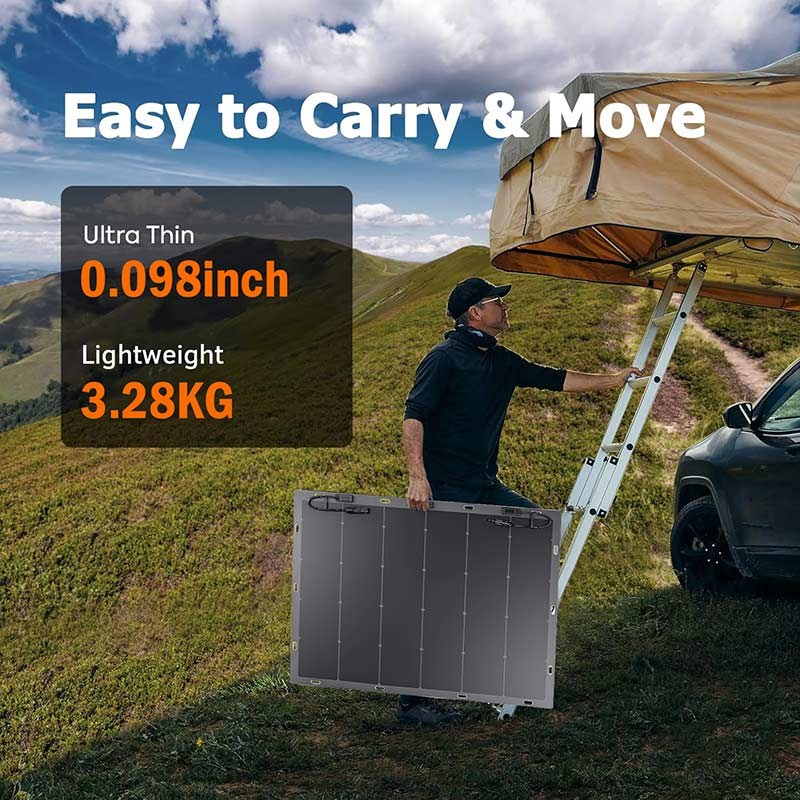
Traditional rigid solar panels usually require flat mounting surfaces and dedicated support structures. However, many applications, including RV roofs, boats, and curved outdoor equipment, have limited installation space or irregular surface designs. A high-efficiency HPBC flexible solar panel offers greater installation flexibility because its lightweight laminated structure can adapt to different suitable mounting surfaces. Consequently, users can make better use of available space while maintaining a practical solar power solution.
Flexible solar panels are particularly useful when conventional modules are difficult to install. Their lightweight construction reduces the additional load on the mounting surface, while the flexible structure allows installation on suitable curved areas. Moreover, this adaptability makes them attractive for mobile power systems and off-grid applications. Nevertheless, the actual installation radius and surface compatibility should always follow the product manufacturer's specifications to avoid excessive bending or structural damage.
How Does HPBC Technology Support Solar Power Generation?
HPBC stands for Hybrid Passivated Back Contact, a solar cell technology that places electrical contacts on the rear side of the cell. This design reduces front-side shading caused by traditional metal contact lines and helps improve the effective light-absorbing area. As a result, HPBC technology can support efficient sunlight utilization and strong electrical performance under suitable operating conditions.
When combined with a flexible lamination process, HPBC cells provide an option for applications that require both lightweight construction and adaptable installation. A high-efficiency HPBC flexible solar panel can therefore help users generate electricity on surfaces where traditional rigid panels may be less practical. However, actual power generation still depends on sunlight intensity, panel orientation, temperature, shading, and installation conditions. Understanding these factors is essential when planning a reliable solar power system.
How to Maximize Power Generation on Curved Installation Surfaces
Correct installation plays an important role in determining the energy output of flexible solar modules. Although curved surfaces offer more mounting possibilities, users should select an area that receives sufficient direct sunlight throughout the day. Nearby trees, roof equipment, antennas, and other obstacles may create partial shading, which can reduce overall power generation. Therefore, evaluating the installation environment before fixing the panel can help improve its energy performance.
The mounting surface should also provide sufficient support and remain suitable for the panel's structure. Users can choose adhesive mounting or drilled fixing methods according to the product design and installation requirements. Additionally, cable routing should be planned carefully to prevent loose connections, sharp bends, and unnecessary tension. These preparations help maintain electrical reliability and reduce potential installation problems.
Another important consideration is the relationship between panel orientation and sunlight exposure. Curved surfaces may change the angle at which sunlight reaches different sections of the module throughout the day. Therefore, users should consider the typical parking position of an RV or the orientation of a boat when selecting an installation location. By reducing unnecessary shading and choosing a suitable mounting position, users can make better use of available solar energy.
Why Choose a 210W Flexible Solar Panel for Mobile Applications?
A 210W flexible solar panel provides a practical power option for applications where weight and installation space matter. For RV owners, boats, and mobile off-grid systems, flexible construction can make it easier to install solar modules on suitable curved surfaces. In addition, the lightweight design helps reduce the structural burden compared with many conventional rigid panel installations. This combination makes flexible solar panels for RV applications particularly attractive for users who want to expand their available solar charging capacity.
The SUPA 210W model uses HPBC solar cells and a single-crystal flexible lamination process. Its rated maximum power is 210W, with a maximum power voltage of 32.4V and a maximum power current of 6.48A. These electrical specifications help users evaluate system compatibility and select appropriate charge controllers and other components. However, actual energy production will vary according to sunlight conditions, operating temperature, panel orientation, and installation environment.
When integrating the panel into an existing solar power system, users should also check the electrical requirements of connected batteries and charging equipment. The maximum power voltage and current provide useful reference values for system planning, but the complete configuration must account for the specifications of all connected components. Consequently, selecting compatible equipment before installation can help avoid unnecessary electrical problems and support stable system operation.
How Does ETFE Surface Material Affect Flexible Solar Panel Performance?
An ETFE flexible solar panel is commonly selected for applications that require a lightweight protective surface and practical outdoor use. ETFE is known for its weather-resistant properties and light transmission characteristics, making it a useful material in certain flexible photovoltaic designs. However, the surface material of a solar panel should be confirmed through the manufacturer's product specifications rather than assumed from its appearance. Users should also consider the panel's overall construction, encapsulation, and environmental protection when selecting a product for outdoor installation.
For curved installations, the protective surface and lamination structure work together to support the solar cells. Nevertheless, users should avoid excessive bending, heavy pressure, and prolonged exposure to high temperatures beyond the manufacturer's recommended operating conditions. These precautions help reduce unnecessary mechanical and thermal stress. Furthermore, regular inspection can identify surface damage or loose connections before they affect system performance.
How to Maintain Flexible Solar Panels for Consistent Power Output
Regular maintenance helps preserve solar panel performance over time. Dust, leaves, bird droppings, and other debris can cover parts of the solar surface and reduce the amount of sunlight reaching the cells. Therefore, users should inspect the panel periodically and clean the surface using suitable methods recommended by the manufacturer. In addition, checking the surrounding installation area helps identify new sources of shading that may have appeared after installation.
When a solar panel produces less electricity than expected, users should first examine the lighting conditions and cable connections. Partial shading, loose wiring, and unsuitable installation angles can all contribute to lower output. If these basic checks do not resolve the issue, the connected battery and other system components may also require inspection. A high-efficiency HPBC flexible solar panel can deliver its intended performance more consistently when users combine suitable installation practices with routine maintenance.
SUPA 210W HPBC Flexible Solar Panel for Versatile Applications
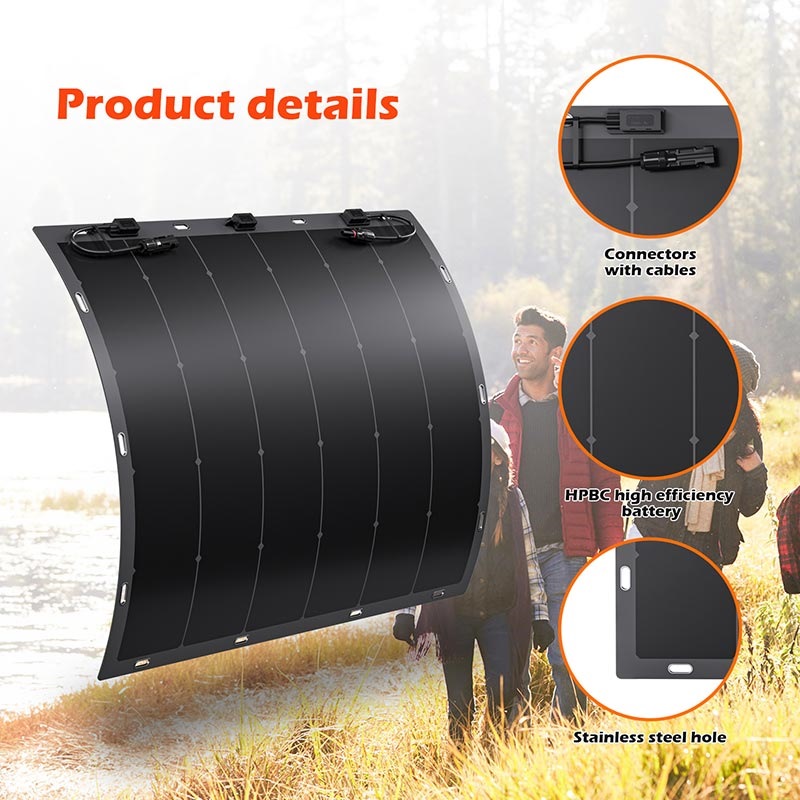
SUPA offers a 210W flexible solar panel designed for applications that require lightweight construction and adaptable mounting options. Its HPBC solar cell technology and single-crystal flexible lamination process provide a practical solution for users looking to install solar modules on suitable non-flat surfaces. With a rated output of 210W, a maximum power voltage of 32.4V, and a maximum power current of 6.48A, the panel provides clear electrical specifications for system planning.
Its flexible and lightweight design makes it suitable for various applications, including RVs, boats, and other mobile solar power systems, provided that the mounting surface meets the product's installation requirements. Users can select adhesive or drilled fixing methods according to the installation environment. Meanwhile, correct cable routing, sufficient sunlight exposure, and regular cleaning help support reliable operation. By combining HPBC technology with flexible construction, the product offers an adaptable option for solar power applications with limited or curved mounting space.
Conclusion
Maximizing solar power generation on curved surfaces requires more than choosing a flexible module. Solar cell technology, installation conditions, sunlight exposure, cable connections, and regular maintenance all influence the final energy output. A 210W HPBC flexible solar panel combines lightweight construction with adaptable installation possibilities, making it a practical option for suitable RV, marine, and off-grid applications. By selecting an appropriate mounting location and following the manufacturer's installation guidelines, users can make better use of available surface space while maintaining consistent solar power performance.